

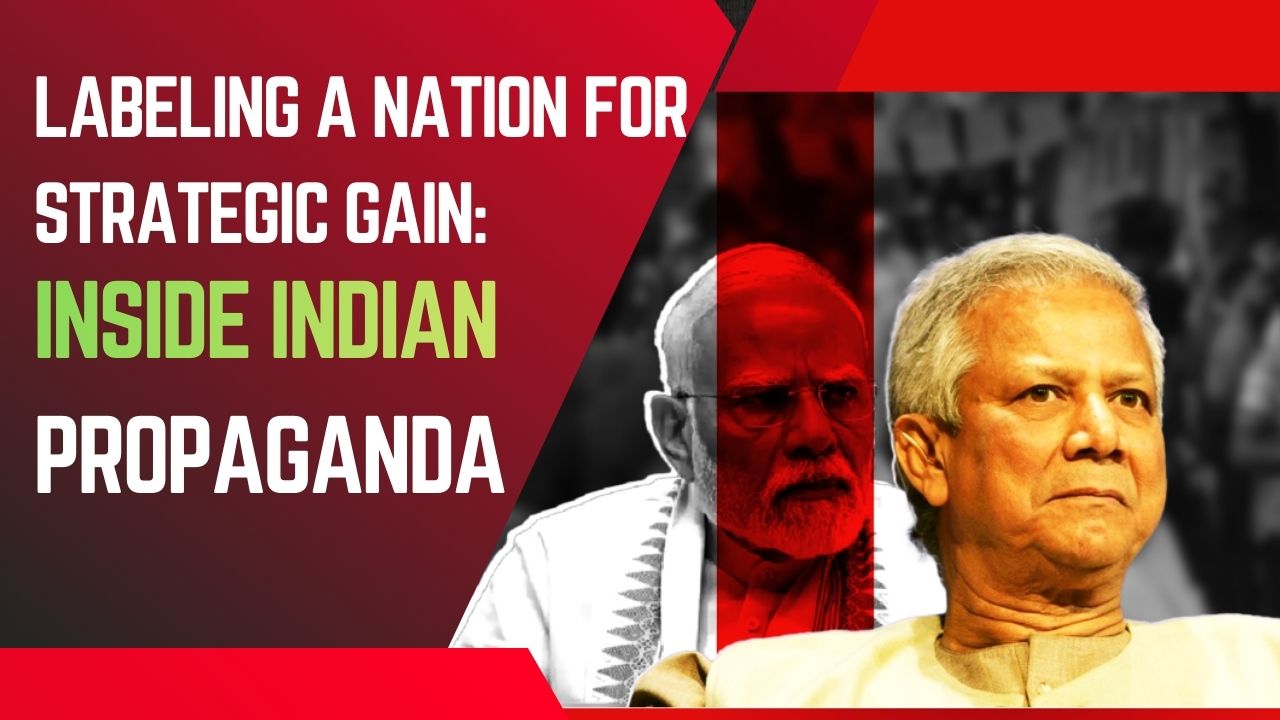
As tensions rise ahead of Bangladesh’s election, some narratives portray the country as spiraling into anti-India hostility or even “new Pakistan” territory. The reality is far more nuanced. Since the ouster of Sheikh Hasina, Bangladesh has been asserting its independence, making clear that India’s friendship does not equate to control. The country is navigating its foreign relations pragmatically, engaging neighbors eye-to-eye while maintaining full autonomy. Contrary to alarmist claims, Bangladesh is not sliding into jihadist or subservient politics. It is a fully independent state, balancing regional friendships without surrendering sovereignty. Negotiating responsibly with India or other neighbors is not hostility—it is measured, strategic diplomacy, and blind obedience or submissive foreign policy is no longer part of Bangladesh’s approach.
Historical comparisons show that Bangladesh and India share ties dating back to 1971, when India intervened in the independence war. However, the nature and impact of India’s involvement remain debated—its actions were influenced not only by support for Bangladesh but also by strategic interests and regional calculations, leaving a complex legacy rather than a purely altruistic one.
Recent tensions between Bangladesh and India have drawn attention, but they must be understood in context. They coincide with major political changes in Bangladesh, including a government transition and shifting voter alignments, and analysts emphasize that current strains reflect election-related dynamics and rhetoric—not an inherent rejection of India by the Bangladeshi state or society. International observers, such as the International Crisis Group, have urged restraint on both sides, recognizing the real risks of escalating nationalist narratives.
Some of the incidents cited in the media, like protests following the killing of youth leader Sharif Osman Hadi, have had concrete—but highly context-specific—consequences. Demonstrations outside Indian missions in Dhaka and Chattogram prompted India to temporarily close several visa centres, including the Rajshahi and Khulna centres, while the Chattogram centre remains suspended. The Dhaka centre was briefly closed before reopening under heightened security. These measures were precautionary and security-driven, reflecting the responsibility to protect staff and citizens, rather than evidence of Bangladesh turning against India (Indian Express, January 2026).
Critics claim that rising anti Indian sentiment is a deliberate political ploy, especially by certain groups, to score points in electoral politics. But this doesn’t mean Bangladesh as a nation has turned against India — it means that political discourse has at times weaponized foreign policy for domestic gain, a phenomenon not unique to Bangladesh. Pushing this narrative too far risks misreading public diplomacy as public antagonism.
Bangladesh’s foreign policy is ultimately guided by its national interests in a changing region where China, India, the United States and others are all active players. Many South Asian “swing states” — including Nepal, Sri Lanka, Maldives and Bhutan — are redefining their foreign relations to balance pressures and opportunities, rather than aligning strictly with any one power.
Instead of viewing Bangladesh through the prism of conflict, it’s more accurate to see it as an independent actor asserting itself, sometimes critically, but always from a position of sovereignty, not coercion. India love does not equal blind friendship, and likewise, engaging in critique does not automatically make Bangladesh an adversary. Even friendly states like Bhutan should strive to assert an independent diplomatic voice, ensuring that close ties with India do not slide into subservience or reduce them to extensions of another power’s narrative. Such independence would ultimately strengthen regional stability rather than weaken it.
In short, what is happening in Bangladesh now is not a slide into a ‘new Pakistan’ or militant anti Indianism, but a complex interplay of internal politics, national interest, and regional geopolitics. Bangladesh is making a stand as a sovereign country with its own agency — and that’s a reality that deserves to be acknowledged, without exaggeration or ideological distortion.
160

