

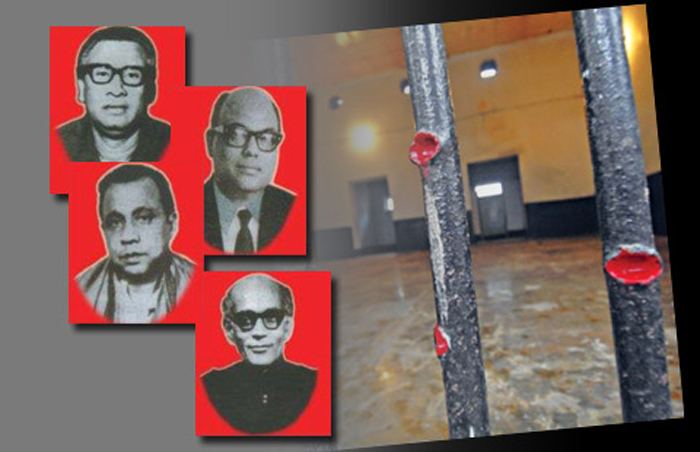
Today marks Jail Killing Day, commemorating the assassination of four top Awami League (AL) leaders—Syed Nazrul Islam, Tajuddin Ahmad, Captain M Mansur Ali, and AHM Quamaruzzaman—inside Dhaka Central Jail on 3 November 1975.
The leaders, who played pivotal roles in Bangladesh’s Liberation War and the formation of the post-independence government, were killed during the rule of Khandaker Mushtaq Ahmad, shortly after the assassination of the country’s founding President Sheikh Mujibur Rahman and most of his family on 15 August 1975.
At the time, Syed Nazrul Islam was acting president, Tajuddin Ahmad served as prime minister, M Mansur Ali was finance minister, and AHM Quamaruzzaman held the home, relief, and rehabilitation portfolio.
The Awami League, which has been absent from open political activities since the ouster of Sheikh Hasina’s government on 5 August 2024, has not organised any official programme to observe the day. Following the government’s overthrow, Hasina escaped to India, where she has been living in exile.
After the Awami League returned to power in 1996, the government revoked an indemnity law and initiated trials against the accused in the jail killings. On 20 October 2004, the Dhaka Metropolitan Sessions Judge Court convicted 15 of the 20 accused—former military officers—sentencing three to death and 12 to life imprisonment.
The death-sentenced convicts were Sergeant Moslem Uddin, Sentry Marfot Ali Shah, and Sentry Mohammad Abul Hashem Mridha. In 2008, the High Court acquitted six convicted individuals, including the two previously given death penalties. Four others were released but later executed in the Sheikh Mujibur Rahman assassination case on 27 January 2010.
The Jail Killing case was reopened in 2012 at the Appellate Division, and on 30 April 2013, the court dismissed the 2008 High Court verdict, upholding the 2004 judgment convicting the 15 accused.
Jail Killing Day remains one of the darkest chapters in Bangladesh’s history, symbolising the loss of key leaders who were instrumental in the nation’s birth and early governance.

