

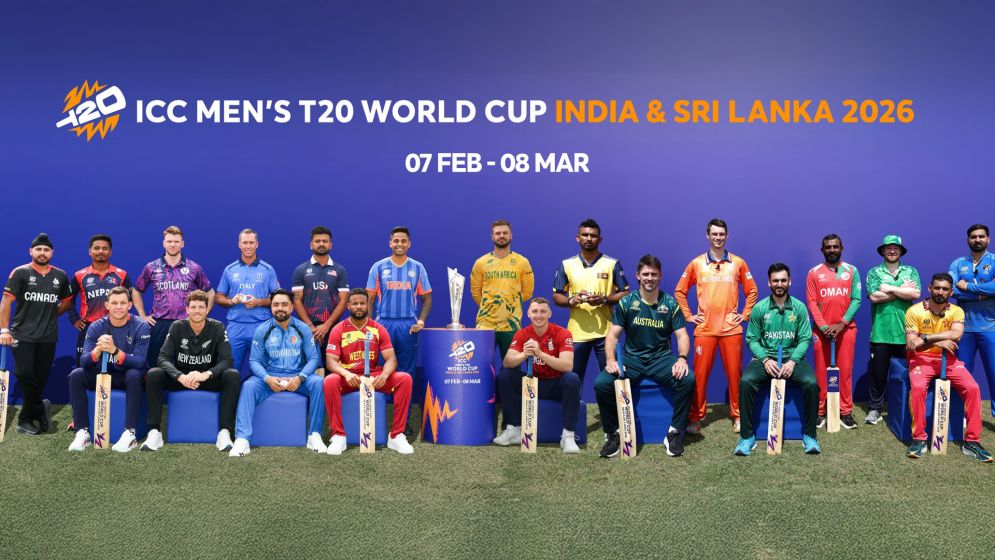
The 2026 ICC Men’s T20 World Cup gets underway on Saturday under a cloud of controversy, marking the first time Bangladesh will not feature in the tournament’s history following a major dispute over security and politics.
Since the competition’s launch in 2007, Bangladesh had participated in every edition. However, the Tigers are absent from this year’s expanded 20-team event, co-hosted by India and Sri Lanka, after the Bangladesh Cricket Board (BCB) declined to send the team to India, citing safety concerns for its players.
Despite the team’s absence, Bangladesh will still be represented at the tournament. Former skipper Athar Ali Khan has been named to the ICC commentary panel, while umpires Sharfuddoula Ibne Shahid Saikat and Gazi Sohel will officiate matches.
What was expected to be a celebration of global cricket has instead been overshadowed by escalating political tensions, security fears and diplomatic exchanges, pushing sporting narratives into the background.
The opening day features three matches: Pakistan take on the Netherlands in a Group A clash in Colombo; West Indies face Scotland in Group C at Eden Gardens, Kolkata; and hosts India meet the United States in Mumbai in another Group A fixture.
For Bangladeshi fans, the start of the tournament brings disappointment, as their team was originally slated to play on the opening day. Bangladesh had been drawn in Group C, a place now taken by Scotland following a late inclusion.
The controversy was sparked when Bangladeshi left-arm pacer Mustafizur Rahman, signed by Kolkata Knight Riders for the upcoming IPL season, was released by the franchise after pressure from Hindu nationalist groups. The move prompted the BCB to request that Bangladesh’s World Cup matches be held outside India, arguing that adequate security could not be ensured.
After consultations, the ICC rejected the appeal, stating that its independent assessment found no credible threat. Supported by the Bangladesh government, the BCB stood firm, leading the ICC to take the extraordinary step of excluding Bangladesh and replacing them with Scotland.
The decision triggered strong reactions across the cricketing world. Pakistan openly supported Bangladesh, while former international players criticised the ICC for inconsistency. Pakistan Cricket Board chairman Mohsin Naqvi even hinted at a possible boycott before stepping back following talks with Prime Minister Shehbaz Sharif.
Pakistan later confirmed its participation but announced it would not face India in the group stage, further intensifying the situation.
What began as a security dispute has now evolved into a wider regional political issue—one that threatens to overshadow a World Cup that has only just begun.

